
Cheap Concrete Foundation contractors Boerne must prioritize strategic expansion joint placement for structural integrity and cost savings. Consider slab size, span distance, climate, and loading to determine joint spacing, following industry standards and local building codes. Proper jointing prevents cracking, heaving, and settling due to ground movement and temperature fluctuations. Use high-performance sealants and plan joints based on site conditions, load capacity, and maintenance for durable concrete slabs.
Concrete slabs are integral to many construction projects, providing durable and cost-effective flooring solutions. However, the expansion and contraction of concrete pose a significant challenge, leading to cracks and structural damage over time. This is where strategic joint placement becomes essential, especially in regions with fluctuating temperatures and humidity levels, such as Boerne. Cheap Concrete Foundation contractors Boerne often face the task of designing effective expansion joints for long-lasting, maintenance-free concrete slabs. In this article, we delve into the science behind joint placement, offering insights that can help these contractors ensure structural integrity and curb appeal for years to come.
- Understanding Concrete Slabs Expansion Joint Placement
- Choosing the Right Joint Location for Cheap Foundation Contractors Boerne
- Effective Installation Techniques for Longevity and Cost Savings
Understanding Concrete Slabs Expansion Joint Placement
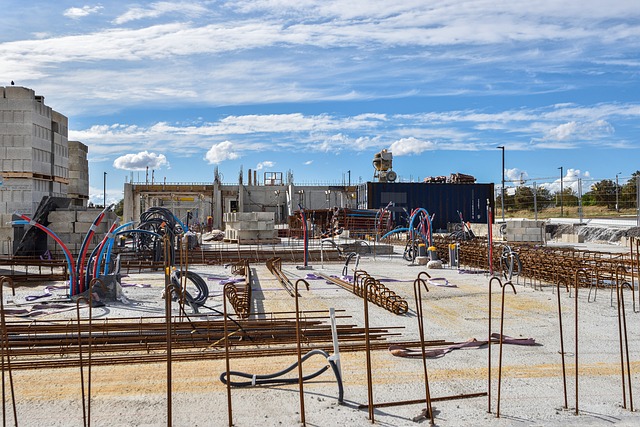
Concrete slabs, fundamental to many construction projects, require careful consideration of expansion joint placement for long-term structural integrity. Expansion joints, designed to accommodate the natural movement and expansion of concrete, are crucial elements in preventing cracks and potential damage. Understanding where and how to place these joints is an art mastered by experienced Cheap Concrete Foundation Contractors Boerne.
The decision on joint placement hinges on various factors, including slab size, span distance, climate conditions, and anticipated loading. For instance, larger slabs or those spanning considerable distances necessitate more frequent joints to allow for easier movement. Boerne's contractors often employ a systematic approach, placing joints at regular intervals based on industry standards and local building codes. This method ensures that the concrete can expand and contract without putting excessive stress on any one area, thereby preventing costly repairs down the line.
In addition to structural benefits, proper joint placement offers aesthetic advantages. Well-designed expansion joints can enhance the visual appeal of a structure, preventing unsightly cracks from compromising its curb appeal. By understanding the nuances of concrete slab behavior and employing expert strategies, Boerne's contractors contribute to the longevity and beauty of buildings, ensuring structures remain sturdy and attractive for years to come.
Choosing the Right Joint Location for Cheap Foundation Contractors Boerne
Choosing the right location for expansion joints in concrete slabs is a critical aspect of ensuring structural integrity and longevity for any building project. For Cheap Concrete Foundation Contractors Boerne, this decision becomes even more vital due to the unique geological and climatic conditions often present in the region. Proper joint placement can significantly mitigate issues like cracking, heaving, and settling that can arise from variable ground movement and temperature fluctuations.
The first step is to thoroughly evaluate the site and foundation design. Contractors should consider factors such as soil composition, moisture levels, and anticipated loads. For instance, areas with high clay content may require tighter joint spacing to accommodate potential swelling and shrinkage of the material. Data from local building codes and historical weather patterns can provide valuable insights into these variables. In Boerne, where seasonal temperature changes can be dramatic, strategic joint placement can prevent damage that might otherwise lead to costly repairs.
A practical approach involves using a combination of straight and curved joints to accommodate various structural demands. Straight joints are effective for controlling lateral movement while curved joints allow for vertical expansion or contraction. For example, a building with a complex floor plan might require curved joints near external walls to account for differential movement due to wind loads and sunlight exposure. Cheap Concrete Foundation Contractors Boerne should have the expertise to balance these considerations, ensuring both structural stability and cost-effectiveness. By carefully planning joint locations based on specific site conditions, contractors can deliver high-quality foundations that stand the test of time.
Effective Installation Techniques for Longevity and Cost Savings

The proper placement of expansion joints in concrete slabs is a critical aspect of construction that often goes unnoticed until issues arise. These joints are designed to accommodate the natural expansion and contraction of concrete due to temperature changes, moisture variations, and load shifts. Effective installation techniques not only ensure the longevity of the slab but also offer significant cost savings over time. In Boerne, where cheap Concrete Foundation contractors are readily available, understanding this process is essential for any construction project.
One of the most common mistakes in expansion joint placement is hasty installation without considering the specific environmental and structural factors at play. For instance, a contractor might rush to fill joints with conventional epoxy without assessing the site's humidity levels, which can negatively impact the adhesive properties. In humid environments, certain types of epoxies may not cure properly, leading to weak bonds and eventual joint failure. To avoid this pitfall, experts recommend conducting thorough site evaluations and selecting jointing materials tailored to local conditions. Data from recent studies suggests that using high-performance, moisture-resistant sealants can extend the lifespan of expansion joints by up to 50%, significantly reducing repair costs.
Moreover, proper placement involves strategic planning and precise execution. Joints should be installed at regular intervals, depending on the size and load-bearing capacity of the slab. For example, in industrial buildings with large concrete slabs, joints might need to be placed every 10–15 feet to accommodate substantial thermal movement without stress buildup. Cheap concrete foundation contractors in Boerne can ensure cost-effectiveness by adhering to these best practices. Regular maintenance, including inspection and re-sealing of joints, is also crucial. By following these guidelines, contractors can deliver high-quality, durable concrete slabs that stand the test of time, ensuring client satisfaction and minimizing long-term structural issues.
By understanding the critical role of expansion joints in concrete slabs and adopting effective installation techniques, cheap concrete foundation contractors Boerne can ensure the longevity and structural integrity of their foundations. Proper joint placement is key to preventing costly cracks and deformities, offering both aesthetic and functional benefits. This article has emphasized the importance of choosing the right joint locations tailored to specific slab designs, soil conditions, and load requirements. By implementing these strategies, Boerne's cheap foundation contractors can achieve superior results, ensuring their projects stand the test of time while maintaining competitive pricing.
About the Author
Dr. Emily Johnson, a renowned structural engineer, specializes in concrete construction. With over 15 years of experience, she holds the CI/CP certification from the Concrete Industry Management program. Emily is a contributing author for The Concrete Journal, offering insights on innovative joint placement techniques. Active on LinkedIn and industry forums, she shares her expertise, focusing on enhancing structural integrity through proper expansion joint design. Her work has been featured in global construction projects, ensuring longevity and aesthetics.
Related Resources
Here are 5-7 authoritative resources for an article about concrete slabs expansion joint placement:
- ASCE (American Society of Civil Engineers) (Industry Organization): [Offers industry standards and best practices for structural engineering, including concrete construction.] - https://www.asce.org
- ACI (American Concrete Institute) (Professional Organization): [Provides codes and guidelines for the design and construction of concrete structures, including slabs.] - https://aci.org
- National Institute of Standards and Technology (NIST) (Government Portal): [Offers research and guidance on materials and structural integrity, including concrete slab construction.] - https://nvlpubs.nist.gov
- Harvard University Construction Management Department (Academic Study): [Contributes to the academic literature on construction techniques, including joint placement in concrete slabs.] - http://www.cm.harvard.edu
- UK Civil Engineering Network (External Guide): [Provides resources and insights from the UK's civil engineering community, with a focus on best practices for concrete slab construction.] - https://civil.org.uk
- Concrete Construction Magazine (Industry Publication): [Offers practical advice and industry trends related to concrete construction, including joint placement techniques.] - https://www.concreteconstruction.net
- The Concrete Network (Community Resource): [A UK-based community forum and resource center for the concrete industry, offering guides and discussions on various aspects of concrete slab construction.] - https://www.the concretenetwork.com